
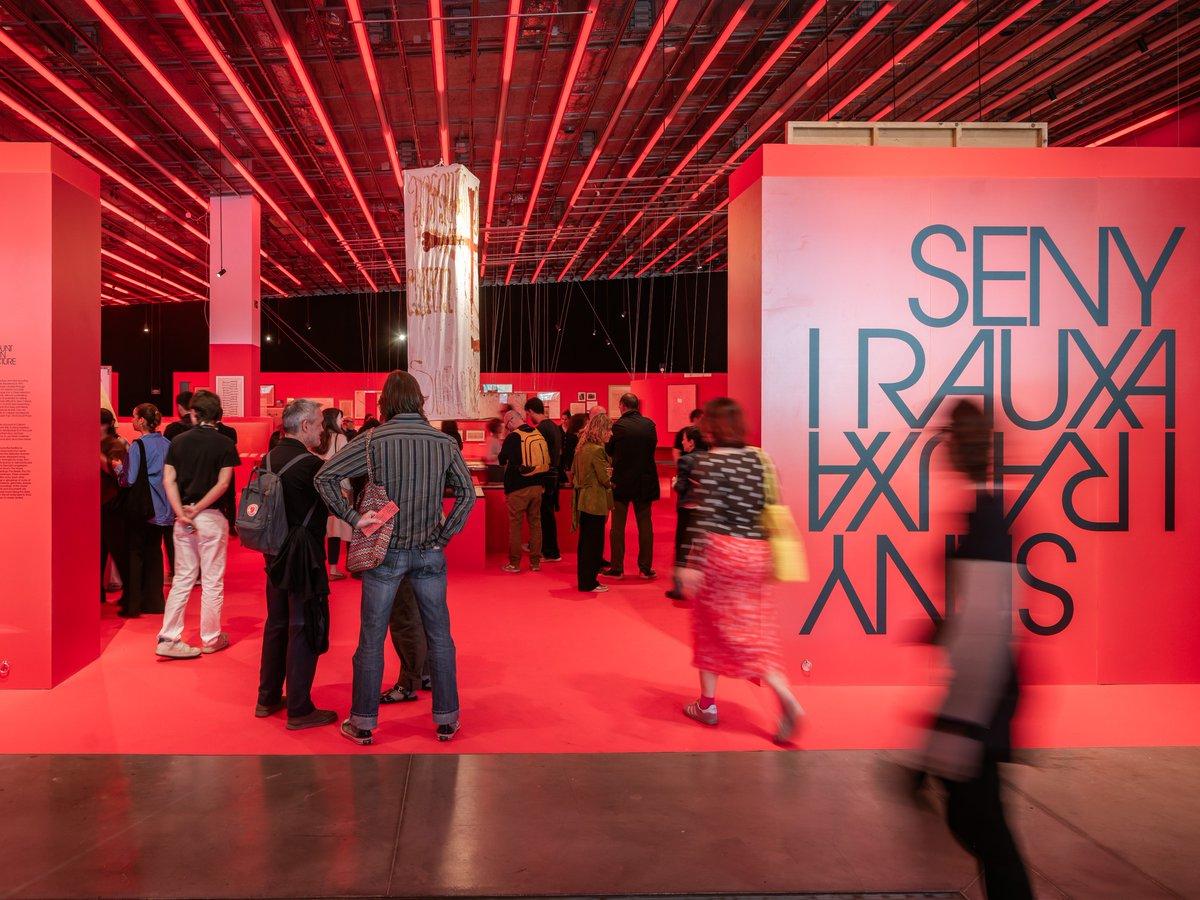
The Institut Ramon Llull, under the auspices of the Department of Culture, will present the international version of the exhibition Seny i rauxa. An Account of Catalan Architecture, originally produced by Barcelona City Council through the Disseny Hub Barcelona (DHub) as part of the Barcelona 2026 World Capital of Architecture programme, at Catalonia in Venice during the 2027 Venice Biennale of Architecture.
This historical, multifaceted exhibition, which invites visitors to reconsider the established canon of modern and contemporary Catalan architecture, will run from May to November 2027 at the Docks Cantieri Cucchini venue in Venice, which has continuously hosted the Catalan presence at the Venice Biennale of Architecture since 2012.
To mark its 25th anniversary, the Institut Ramon Llull will present a collective and diverse exhibition and, in doing so, will continue to promote Catalan architecture internationally on one of the world's leading stages. On this occasion, the selection process for participating in the Collateral Events at the Biennale will not be conducted via an open call. As explained by Anna Guitart, Director of the Institut Ramon Llull, ‘We want to undertake a reflection process with the sector's key players to assess, together with the local ecosystem, the model for our participation in Venice, with the aim of restarting the participatory process for the 2029 Biennale of Architecture’.
As in previous editions, the institute will continue to foster and support the participation of Catalan and Balearic architects in the 2027 Biennale of Architecture international exhibition, from 8 May to 21 November. The participants have yet to be selected by its artistic directors, Chinese architects Wang Shu and Lu Wenyu, who have chosen the theme ‘Do Architecture – For the Possibility of Coexistence Facing a Real Reality’.
The exhibition Seny i rauxa is currently open to the public at the Disseny Hub Barcelona (DHub) until 6 September. Curated and designed by architects Carme Ribas, Victòria Garriga and Joan Roig, the project brings to light hundreds of pieces from warehouses and archives, where they are usually kept out of public view. Through these items, it invites visitors to discover an unbroken thread of continuity stretching from the founding of the Escola d’Arquitectura de Barcelona in 1875 to the present day, transcending styles and historical periods. At a time when architecture is understood as a globalised phenomenon, the exhibition explores whether traits found in the work of Berenguer de Montagut or Pere Blai – the master builders of Santa Maria del Mar and the new façade of the Palau de la Generalitat, respectively – are echoed in more recent projects by Domènech i Montaner, MBM or Harquitectes.