
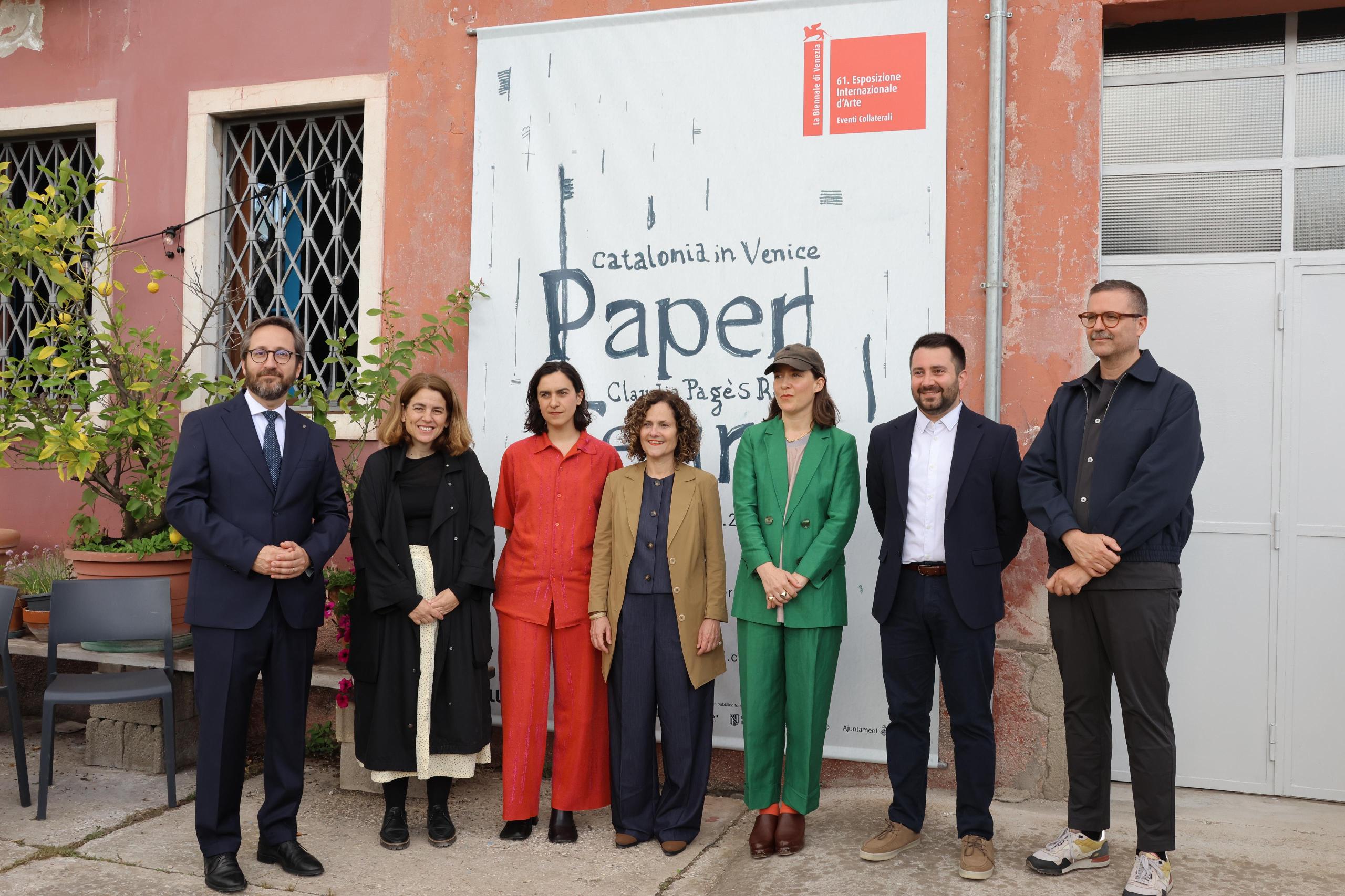
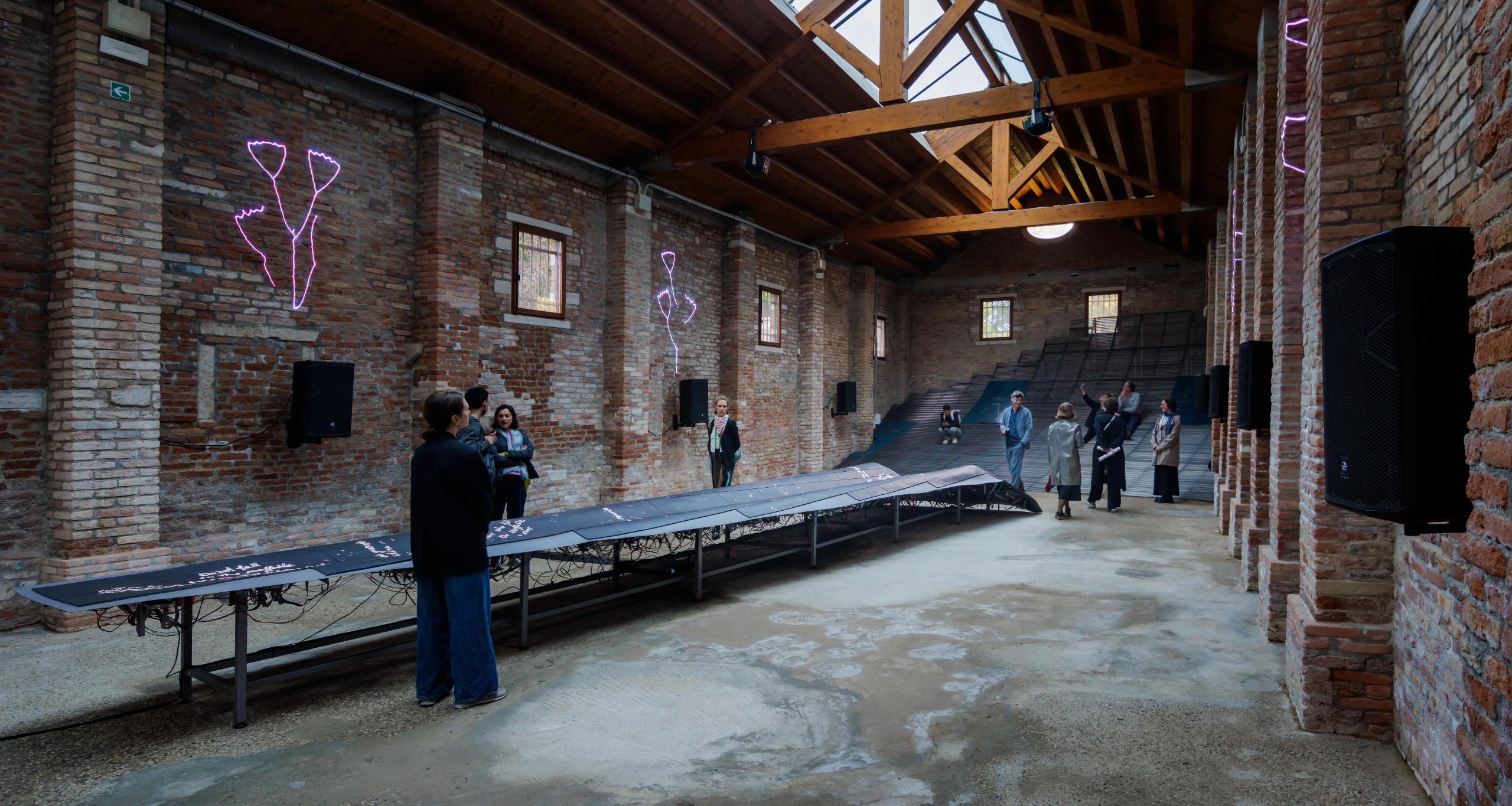
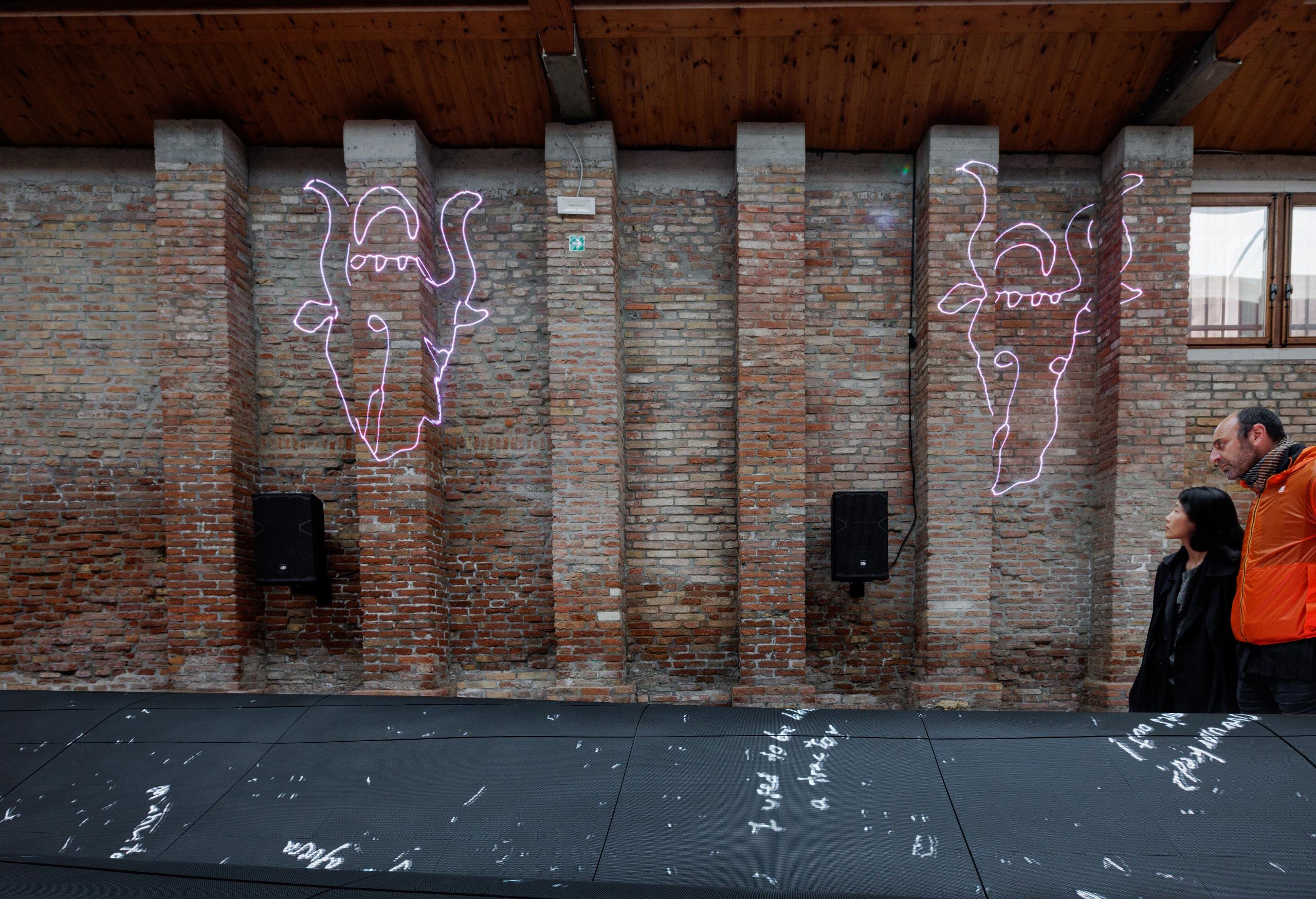
Paper Tears is an installation combining light, sound, image and choreography, featuring a central element: an archive of watermarks—drawings only visible when held up to the light—currently housed at the Capellades Paper Mill Museum (Museu Molí Paperer de Capellades). Drawing on a selection of 15th-century watermarks, Claudia Pagès Rabal opens a dialogue between past and present. The work evokes a period of historical transition in which Mediterranean trade declined and Atlantic routes expanded, ushering in European modernity and extractive colonial systems. In this context, regions such as Venice and Catalonia played a prominent role in a transformation that continues to shape the present day.
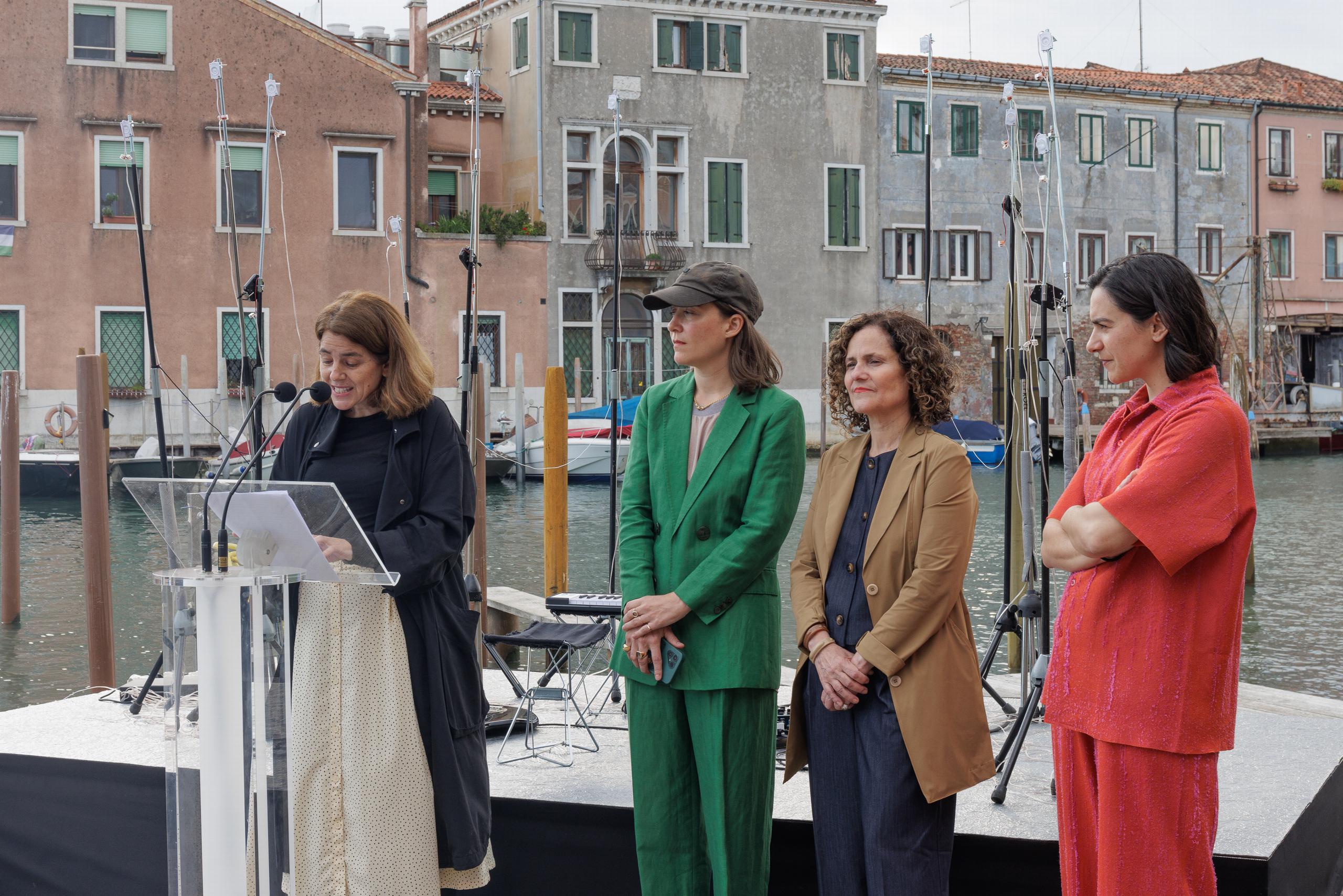
The presence of Catalan culture at the Venice Art Biennale strengthens its international profile and visibility on one of the world’s leading artistic stages. In this regard, the Minister of Culture, Sònia Hernández, said, “the Catalan government's commitment to Catalan creation, its internationalisation, support for artists and culture as a space for dialogue, transformation and a driver of critical thinking, is essential for addressing the challenges of the present and future".
Hernández stated that Claudia Pagès’s proposal, Paper Tears, “connects heritage, memory and critical reflection on systems of knowledge and power It is an exhibition deeply rooted in Catalonia’s industrial history through paper and water, an element that takes on special symbolism here in Venice".
Finally, the Minister of Culture highlighted the work of the Institut Ramon Llull, "which makes Catalonia’s presence in Venice possible and, across the board, promotes production spaces, artistic residencies and circuits for the international dissemination of Catalan culture".
The Director of the Institut Ramon Llull, Anna Guitart, emphasised the narrative of artistic excellence built through continued presence at the Biennale: "Catalonia’s presence in Venice year after year helps consolidate a distinct narrative of contemporary Catalan and Balearic artistic production, contributing reflection and dialogue to the international cultural ecosystem".
She added, “For the Institut Ramon Llull, supporting projects such as Paper Tears by Claudia Pagès Rabal reflects our commitment to the international dissemination of Catalan and Balearic artists and their work, while maintaining a connection to our own context and embracing culture as a space of complexity. We'll continue working to position our creators in key international settings”.
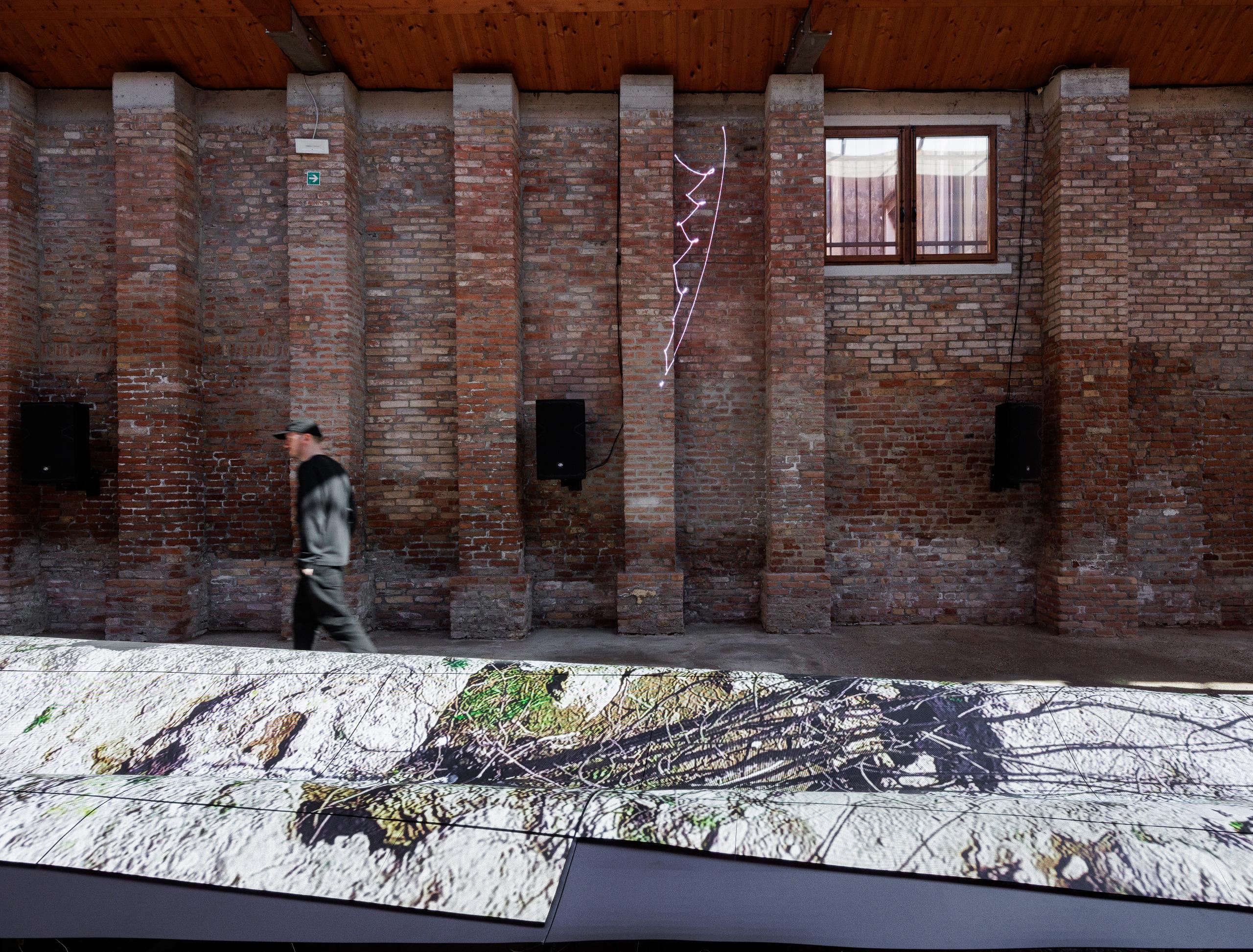
Paper Tears unfolds through multiple points of view, oscillating between collective narration and individual experience. Four lasers project an evolving archive of 15th-century watermarks and hand-drawn animations by Claudia Pagès Rabal onto the walls of the space. Elise Lammer, the exhibition’s curator, pointed out that “watermarks are almost invisible, and that's precisely the point. They remind us that power rarely operates on the surface. It is embedded in systems that circulate silently, only becoming visible under certain conditions. In this sense, by tracing their material origins and production processes, which are deeply intertwined with water, Pagès Rabal reveals how these structures are both physical and symbolic, and how they continue to shape the present”.
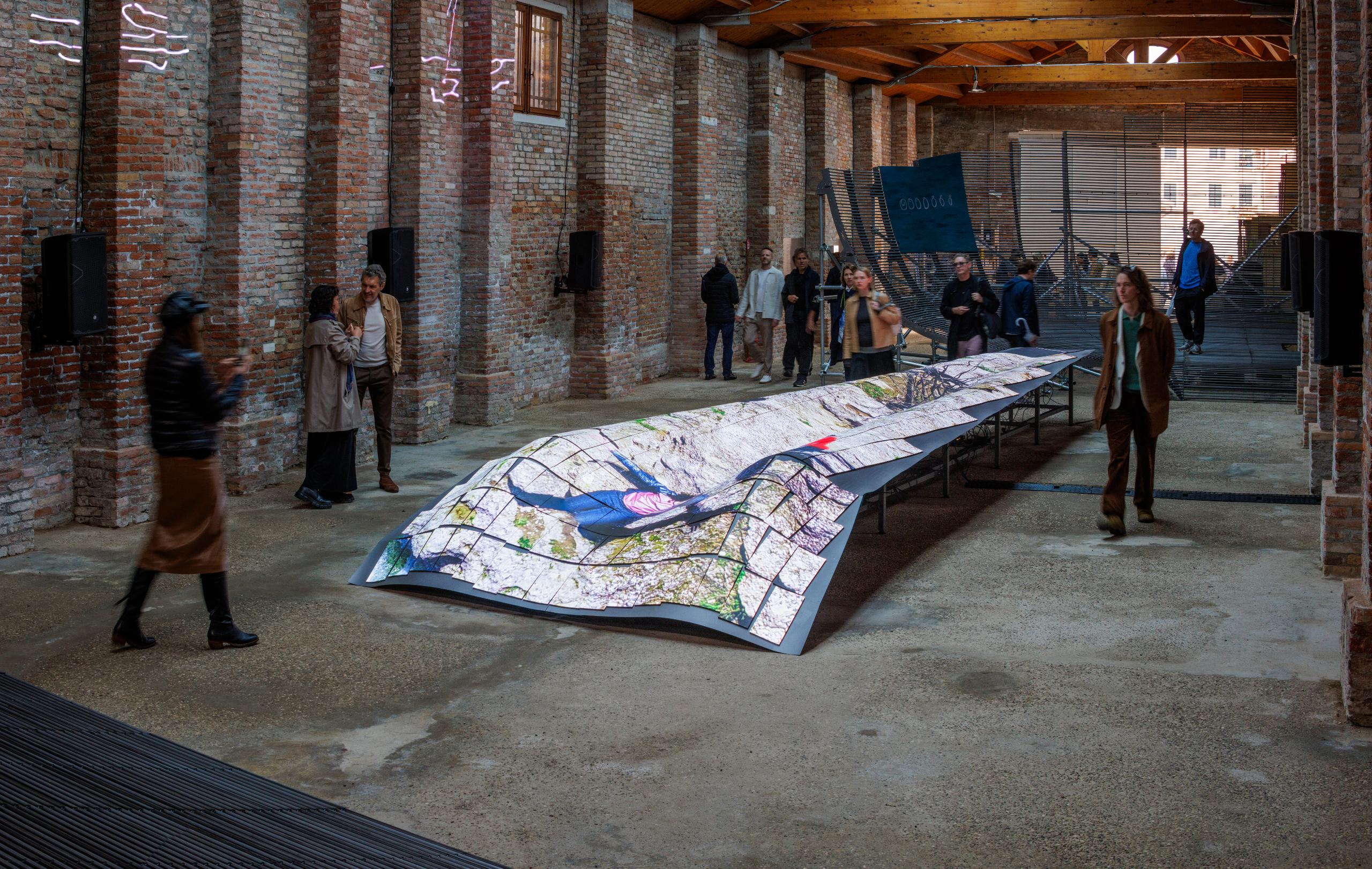
At the centre of the installation is a 10-metre LED screen projecting a video filmed in various locations across Catalonia. Defined by the presence and movement of water, the footage encompasses a range of environments, from springs and riverbeds to various infrastructure. The video also features several characters who, following a dramaturgy developed by the Catalan artist, address events from the period in which the watermarks were produced. According to Pagès Rabal, these events “lead us to reflect on the present and generate monologues on linguistic euphemisms, boycotts, universal visions and individual quanta, as well as the impact all of this has and how it is reflected in our bodies”.
Catalonia’s involvement in the Venice Biennale highlights the Department of Culture's commitment to promoting contemporary artistic creation and its international profile. In this regard, Claudia Pagès Rabal’s proposal also exemplifies the drive to strengthen digital culture by integrating performing, visual and technological languages.
The Institut Ramon Llull organises and produces Catalonia in Venice, Catalan culture's contribution to the Eventi Collaterali of La Biennale di Venezia. It has participated in the Art Biennale since 2009 and the Architecture Biennale since 2012.
This year, it is also worth noting that the Spanish Pavilion is presenting Los restos, a project created by Catalan artist Oriol Vilanova and curated by Carles Guerra.