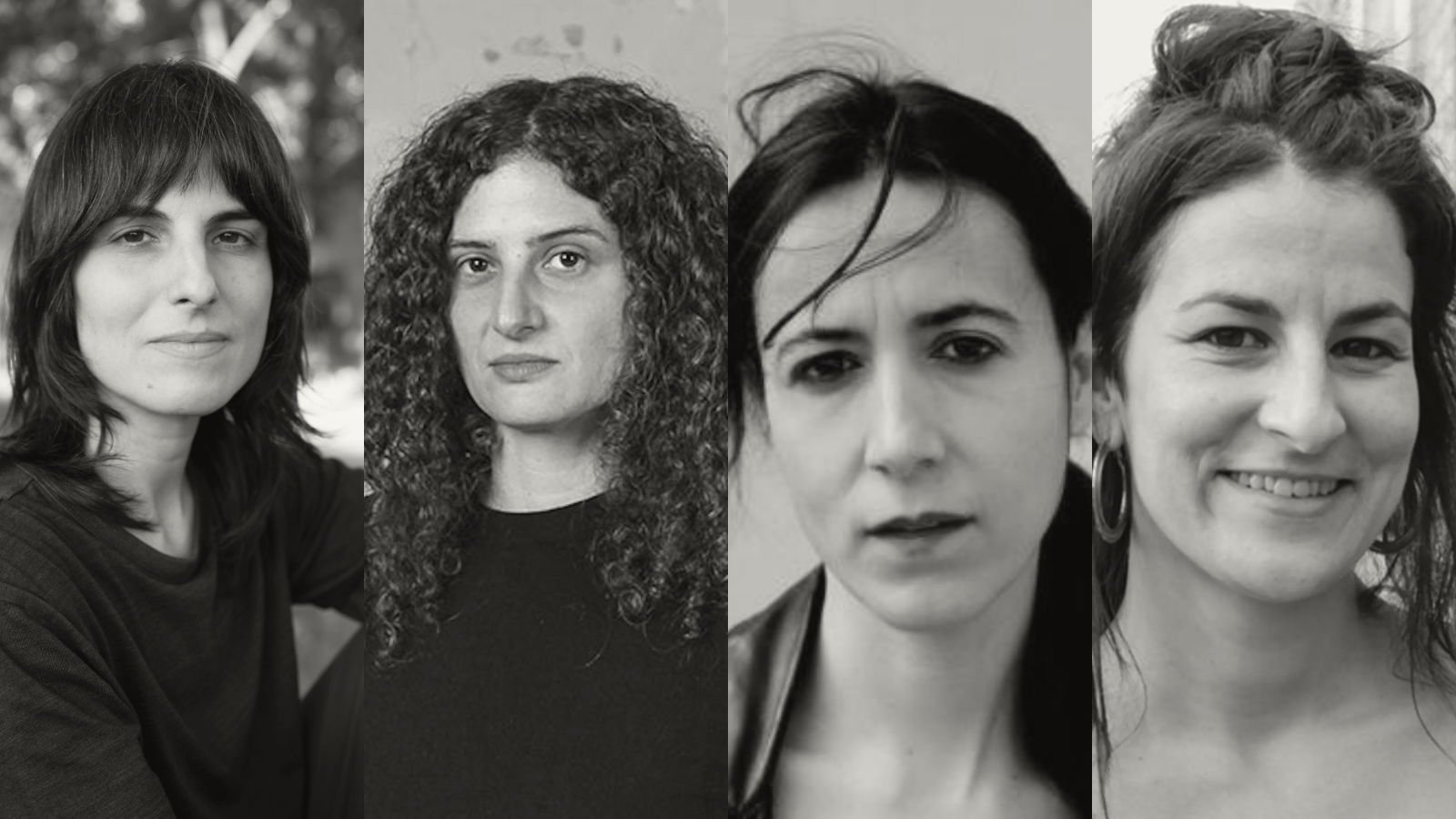
Catalan contemporary art will have a prominent presence at the 18th Lyon Biennale of Contemporary Art, running from 19 September to 13 December 2026 and featuring artists Luz Broto, Lúa Coderch, Laia Estruch and Núria Güell. Their presence will be supported by the Institut Ramon Llull, which promotes the international profile of Catalan visual arts at the sector''s leading global events.
The four Catalan projects
Luz Broto deploys a repertoire of protocols for the city of Lyon
Luz Broto (Barcelona, 1982) will present Put Oneself in the Place of the Other at the biennale, a project that explores notions of empathy, trust and interdependence through small modifications to everyday routines. The project combines the presentation at the Musée des Tissus of the book of the same name, initially produced as part of Manifesta 14, with a series of eight protocols translated into French and installed in various spaces across the city of Lyon.
Through instructions that invite participants to exchange keys, objects, routes or habits with other people, the work generates situations that subtly alter the perception of space and social relations. This project continues the research Broto has been conducting for more than a decade on the invisible structures that organise collective life. Her work, based on context-specific interventions, has been presented at institutions such as the biennale Manifesta 14, the Secession in Vienna and the MACBA.
Lúa Coderch revisits Barcelona Pavilion, exploring memory, architecture and cultural value
At Les Grandes Locos, Lúa Coderch (Iquitos, Peru, 1982; based in Barcelona) will present International Style [Pavilion], a new project that explores Barcelona Pavilion, designed by Ludwig Mies van der Rohe and Lilly Reich. The project reproduces some of the building''s architectural elements in the form of large inflatable sculptures and reflects on the construction of cultural value, memory and the economies linked to modern architecture.
The artist creates works she describes as “investigative devices”, somewhere between installation, narrative and sculpture, and has recently exhibited at Bòlit Centre d’Art Contemporani, La Fabra Centre d’Art Contemporani, the Fundació Joan Brossa, the Museu Tàpies, the Centre d’Art La Panera, the MUAC in Mexico City and the ARCO Madrid art fair.
Laia Estruch: the body, voice and space as sculpture
Also at Les Grandes Locos, Laia Estruch (Barcelona, 1981) will present Carrau (2026), an installation conceived specifically for the Lyon venue. Situated at the intersection of sculpture, performance and vocal research, her practice explores how sound, breathing and movement traverse social and architectural spaces. The piece comprises three large-scale inflatable doors activated by visitors passing through them, turning the act of entering and exiting into a performative experience. Through these thresholds, Estruch invites the viewer to reflect on transitional spaces, situated between interior and exterior, before and after.
Her work has recently been exhibited at institutions such as the Museo Reina Sofía, the MNAC, the MACBA, the Triennial Kortrijk and the Casal Solleric.
Núria Güell questions the limits of the art market
At the biennale, Núria Güell (Vidreres, 1981) will present Degenerate Political Art. The Epstein-Lang Connection, a project exploring the relationships between the art market, tax evasion and the construction of cultural prestige. The project takes the form of an art gallery registered in a tax haven and installed within the biennale. Through this, the artist highlights the links between economic power, philanthropy and the cultural industry, while questioning the mechanisms by which value is produced within the art system.
The work forms part of a broader practice marked by a critical analysis of the legal, economic and institutional structures that regulate society. Through actions, mechanisms and interventions that often involve real people and administrative processes, Güell uses art as a tool for political and social intervention, capable of generating debate and challenging established conventions. She has recently exhibited at international events and institutions such as the Malta Biennale, Manifesta 14, S.M.A.K. in Ghent and the MNAC.
The participation of these four artists reflects the vitality and international recognition of contemporary Catalan art. With the support of the Institut Ramon Llull, their work will form part of one of the most influential platforms for contemporary European art, thereby strengthening Catalonia’s presence on the major international visual arts circuits. The participation of the four artists is also supported by the Fundació Úniques and Catapulta.
The Lyon Biennale
Since its inception in 1991, the Lyon Biennale has established itself as the leading contemporary art event in France and one of the major fixtures on the international calendar. Each edition brings together artists from around the world in a programme spread across various iconic venues in the city and the wider region. The 2026 edition, curated by Catherine Nichols under the title Passer d''un rêve à l''autre (‘Passing from one dream to another’), will explore the idea of material, social and symbolic economies through the work of nearly 100 international artists.
The biennale regularly welcomes around 300,000 visitors, while its interventions in public spaces attract over 2.7 million spectators, making it one of the most influential platforms for showcasing art in Europe.